
This seminar will take place on July 15 at 15:30. The seminar will be in a hybrid format with:
- in-person session in the IST Alameda Campus, Department of Engineering and Management's Meeting Room
- online, via Zoom https://zoom.us/j/94291043497?pwd=4zwt51t0vBfRbvHukZfTI3J8RNTNae.1
Our seminars are free to attend and open to everyone. Please share with whomever may be interested.
Summary
Scholars have identified multiple drivers of employee entrepreneurship: the desire to exploit their ideas and inventions (Anton & Yao 1995; Nikolowa 2014), possession of private information about their value (Chatterjee & Rossi-Hansberg 2012; Kaul et al. 2024; Shane 2000), strategic disagreements with management (Klepper 2007), and labor market frictions (Campbell et al. 2017). In this paper, we examine how exposure to innovation as an employee affects both the likelihood of becoming an entrepreneur and the performance of the new company they create. We propose that witnessing the innovation process firsthand in their jobs equips workers to create innovative startups of their own. Connecting data from the Community Innovation Survey, the matched Employer-Employee dataset, and the integrated corporate tax dataset from Portugal (2009 to 2024), we find that, contrary to our expectations, workers of companies introducing new products and services to the market are less likely to become entrepreneurs. Whether those who decide to make the leap create higher-quality ventures remains a question we aim to explore.
Speaker's bio
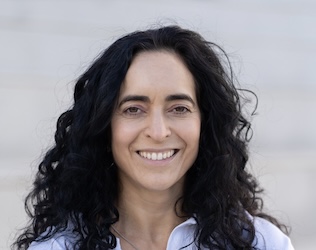
Carla Costa is an Assistant Professor at the Engineering and Management Department at Técnico Lisboa and a member of the CEGIST research center. She holds a Ph.D. in Strategy, Entrepreneurship, and Technological Change from Carnegie Mellon University (USA), an M.Sc. degree in Engineering Policy and Management of Technology from Técnico Lisboa, and a B.S. in Business Administration from ISCTE (Portugal). Before joining academia, Carla worked for the Portuguese Governmental Agency for Innovation, supporting the development of technology-based companies, and gained hands-on experience at a biotech business incubator and at Técnico's entrepreneurship office. Carla spent twelve years in the Netherlands as a lecturer and assistant professor at Maastricht University and Utrecht University, where she taught courses in innovation and entrepreneurship. Her research examines how entrepreneurship influences industry dynamics within innovative clusters and how embodied knowledge contributes to the emergence of spinoffs. She is also interested in understanding the role of pre-acceleration programs in fostering new venture creation. Carla is actively involved in the international research community while maintaining connections with entrepreneurs.